


Renovating Your Alabama Home? When You May Need Builders Risk Insurance
A kitchen update and a full structural renovation do not create the same insurance issues. Before demolition begins, Alabama homeowners should review their homeowners policy, the construction contract, vacancy plans, and whether a separate builders risk policy is needed.
At Allison Insurance, we regularly hear a version of the same question: “Do I need builders risk insurance for my renovation?” The answer depends less on the project’s price tag than on what the project changes. A cosmetic update may be handled with a homeowners-policy review or endorsement. A project that changes the structure of the residence usually calls for a more detailed insurance plan—and often a separate builders risk policy.
This guide is written for homeowners, landlords, real-estate investors, and people planning additions or substantial remodels in Birmingham, Mountain Brook, Vestavia Hills, Homewood, Hoover, Pelham, Alabaster, Shelby County, and surrounding Central Alabama communities.
This article is general information, not a coverage guarantee. Each policy, carrier, construction contract, permit requirement, and property is different. Review your plan with an Allison Insurance team member before work starts.
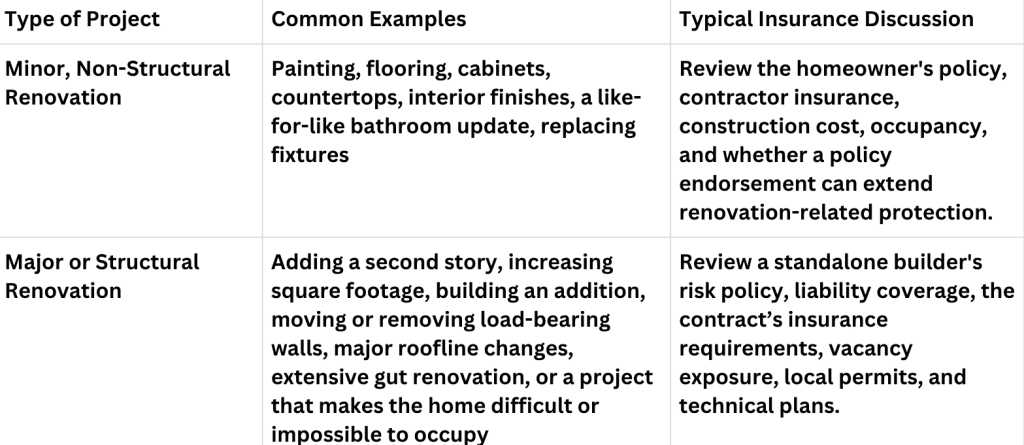
Start Here: Is Your Renovation Minor or Major?
For insurance-planning purposes, a useful dividing line is whether the project involves structural changes to the residence.
What Is Builders Risk Insurance?
Builders risk insurance—also called course of construction coverage—is property coverage designed for a building while it is being built, rebuilt, or substantially renovated. Depending on the policy, it may help insure the existing structure, the work in progress, and covered materials or fixtures against causes of loss such as fire, theft, vandalism, wind, or other covered events.
The exact scope matters. A policy may address questions such as:
-
Is the existing home included, or only the new work?
-
Are materials covered only at the jobsite, or also while in transit or temporarily stored elsewhere?
-
Is theft covered? What protective safeguards apply?
-
Are debris removal, ordinance or law, soft costs, or delay-related expenses included?
-
What wind, water, flood, earth movement, and theft exclusions or deductibles apply?
-
When does coverage begin and end?
Builders risk is not a standard, one-size-fits-all product. The insured value, construction timeline, occupancy, protection class, project type, and contract all influence the policy needed.
Minor Renovations: A Homeowners Policy May Be the Starting Point
If the project is non-structural and you will continue living in the home, a separate builders risk policy is not always necessary. In many cases, Allison Insurance can review whether the current homeowners policy can be endorsed or adjusted to provide builders-risk-type protection for the renovation.
That review should happen before materials arrive or a contractor tears into the home. We will typically want to know:
-
What is being changed, and does any work affect framing, foundations, rooflines, or load-bearing walls?
-
What is the total renovation cost, including labor and materials?
-
Will you live in the home continuously?
-
Will materials be delivered early or stored on the property?
-
Is a general contractor involved, and what insurance does the contract require?
-
Will the completed project increase the home’s replacement cost?
Do Not Overlook Vacancy
Even a minor renovation deserves a vacancy conversation if the home will be empty for an extended period. Homeowners policies often contain vacancy or unoccupancy provisions that can restrict certain coverage after a specified period. The exact language differs by policy, and renovation activity alone should never be assumed to solve the problem.
Tell us if you are moving out during construction, if utilities will be shut off, or if the house will be largely inaccessible. We can review the actual policy language and determine whether an endorsement, vacant-property solution, builders risk policy, or another change should be considered.
Major Renovations: Treat Insurance as Part of the Project Plan
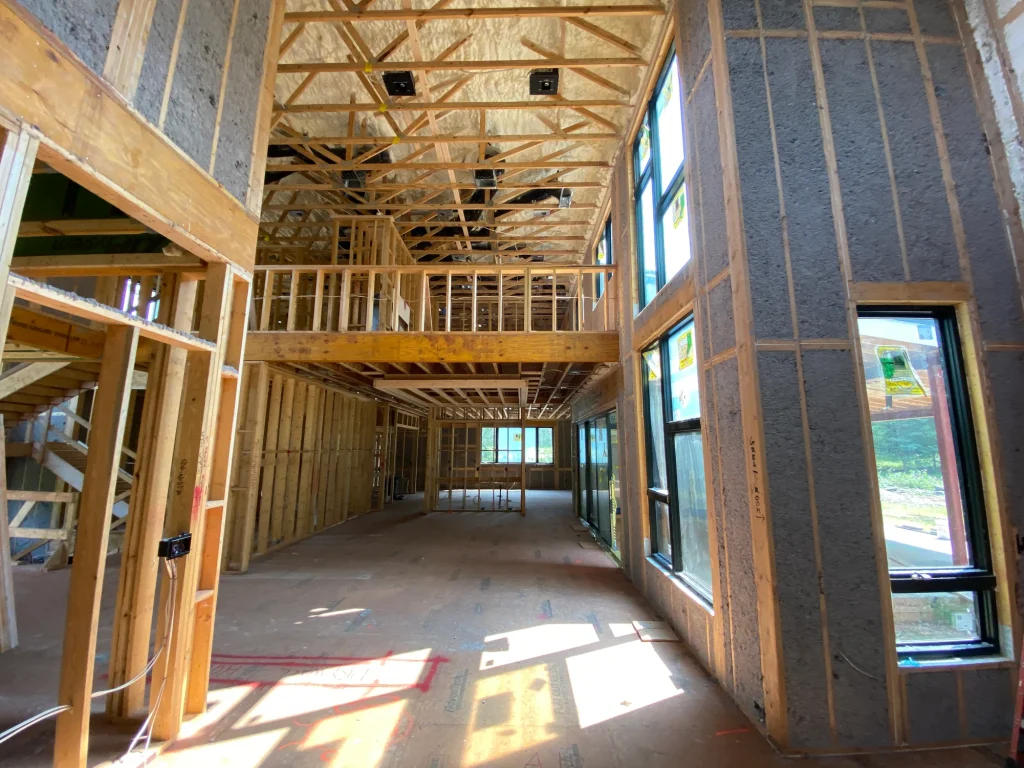
If you are adding a level above an existing level, adding square footage, shifting load-bearing walls, changing rooflines, or doing an extensive gut renovation, you are in major-renovation territory. This is where a standalone builders risk policy is frequently appropriate.
For these projects, insurance planning should be coordinated with the contractor, lender (if applicable), and local building department. The goal is to avoid a gap between the homeowners policy and the exposure created by construction.
Engineering, Plans, and Permits
Structural work has implications beyond insurance. A project that adds a story, expands the footprint, or changes load-bearing elements often requires drawings, permits, and review by the local authority having jurisdiction. Depending on the scope and municipality, plans prepared or reviewed by an Alabama-licensed design professional or structural engineer may be required.
For example, Hoover requires drawings and other documentation for residential additions. Local requirements vary, so confirm the permit and engineering requirements with your contractor and the building department where the property is located. Do not rely on a general rule from another city or county.
Larger Alabama Jobs Can Have a Tighter Market
 For substantial homeowner renovations in Alabama, the market can be more limited than many people expect. Eligibility varies significantly by carrier and can depend on total insured value, project cost, construction type, the contractor’s experience, occupancy, protection features, and the nature of the structural work.
That is why Allison Insurance recommends beginning the insurance conversation early—ideally when you are gathering contractor bids, not after a construction contract has already been signed. Early planning gives more time to identify the appropriate market and align the coverage with the project.
Builders Risk Does Not Automatically Include Liability Coverage
One of the most important misunderstandings is assuming that builders risk automatically covers injuries or legal claims at the jobsite. Builders risk primarily addresses covered property loss. Liability coverage may be excluded, limited, optional, or provided through a separate policy, depending on the carrier and program.
Ask these questions before work starts:
-
Does the contractor carry commercial general liability insurance?
-
Does the contractor carry workers’ compensation coverage when required and appropriate for its workforce?
-
Can the homeowner be added as an additional insured when the contract calls for it?
-
Does the builder’s risk policy contain any liability protection, or is separate liability coverage required?
-
Who is responsible for an injury to a visitor, subcontractor, or delivery person?
Request current certificates of insurance from the contractor, but remember that a certificate is not the insurance contract. Review the construction agreement and insurance requirements with the contractor and your insurance professional.
Who Usually Buys the Policy: Homeowner or Contractor?
The contractor often arranges builders risk coverage, but not always. The answer should be stated clearly in the written construction contract.
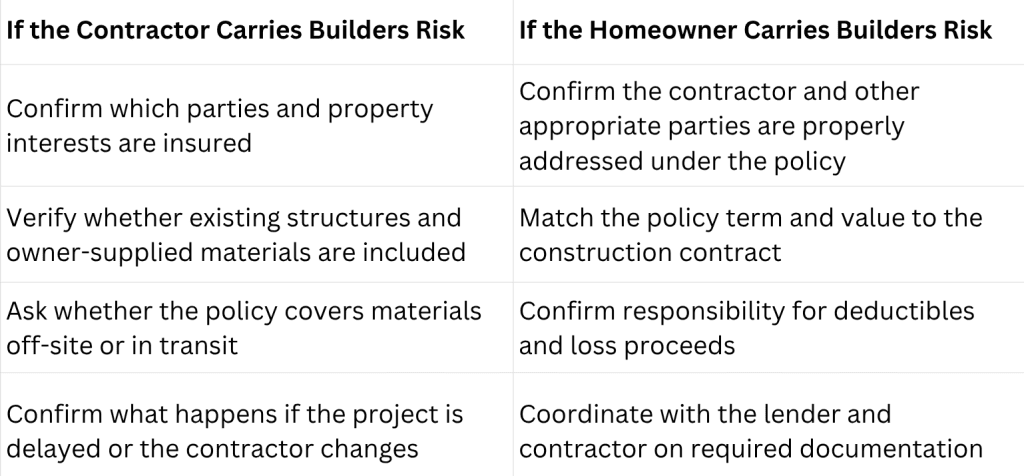
Do not assume that “the contractor is insured” means your home, existing structure, materials you purchased, or financial interest are adequately protected. Similarly, do not assume the contractor’s liability policy replaces builders risk property coverage.
A Simple Central Alabama Renovation Checklist
Before demolition, delivery, or structural work begins:
-
Share the scope of work, contract price, start date, and projected completion date with Allison Insurance.
-
Identify whether the project is minor/non-structural or major/structural.
-
Tell us whether you will occupy the home throughout the project or leave it vacant.
-
Obtain the contractor’s certificate of insurance and review the contract’s insurance section.
-
Confirm who is responsible for builders risk, general liability, deductibles, and claims coordination.
-
Ask whether the existing structure, additions, materials in transit, and materials stored off-site are covered.
-
Check with the local building department and qualified professionals about permits, drawings, and engineering requirements.
-
Update the home’s replacement cost and homeowners coverage when construction is complete.
Frequently Asked Questions
Do I need builders risk insurance for a kitchen or bathroom remodel?
Maybe not. If the work is non-structural, you remain in the home, and the renovation is relatively contained, an endorsement or adjustment to the homeowners policy may be the more practical solution. The right answer depends on the project, policy, contractor, and carrier requirements.
Do I need builders risk insurance if my contractor is insured?
Possibly. Contractor insurance may protect the contractor’s liability exposure, but it may not insure your existing home, your materials, or your financial interest in the work. Review the contract and insurance docu ments before construction starts.
Does builders risk cover someone getting hurt at the jobsite?
Not necessarily. Many builders risk policies are property-focused and do not automatically include the liability coverage needed for injury claims. Review general liability, workers’ compensation, and any available liability options separately.
What if we move out while the renovation is underway?
Call Allison Insurance before you leave. Vacancy or unoccupancy provisions in a homeowners policy can affect coverage, particularly when a home is empty for an extended period. We can review the policy and project details with you.
When should I call about renovation insurance?
Call when you are planning the project or obtaining bids. For major renovations—especially additions, second-story work, square-footage increases, or load-bearing-wall changes—early review is especially important because suitable coverage may take time to arrange.
Talk With Allison Insurance Before Work Starts
Whether you are updating a condominium in Homewood, remodeling a house in Mountain Brook or Vestavia Hills, adding space in Hoover or Pelham, renovating an investment property in Birmingham, or planning a project elsewhere in Central Alabama, do not leave insurance until the final walk-through.
Reach out to an Allison Insurance team member before construction begins. We will help you review the renovation scope, current homeowners coverage, vacancy plans, contractor documents, and builders risk options so you can make an informed decision before the project is underway.
205-738-7444
About the Author:
 Scott Nesbitt is the Owner of Allison Insurance where he and his team advise homeowners across Alabama on home, auto, and umbrella insurance. Scott’s focus is on supporting lenders, real estate professionals, and financial advisors to provide their clients an exceptional insurance experience. He holds both the Certified Insurance Counselor (CIC) and Certified Risk Manager (CRM) designations and has helped insure thousands of homes throughout the state.
Allison Insurance has over 2,500 clients across Alabama, Tennessee and Georgia. The Allison Insurance team has over 125 years cumulative experience in advising individuals and businesses in their insurance decisions!